Adhesive Window Film
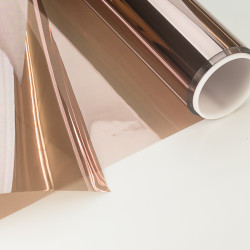
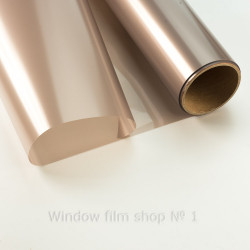
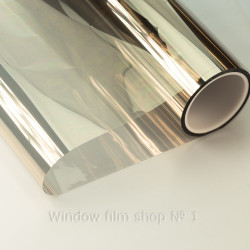
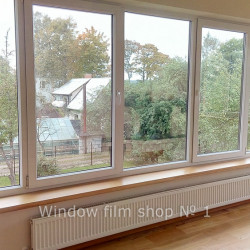
Adhesive window film is a glass covering with the glue already on it: you peel the liner, wet the pane, and the sheet goes on. Nothing else to buy, nothing to mix. The films are made of polyester, vinyl or PVC and cover the whole range of jobs - blocking heat and glare, adding privacy, holding broken glass together, decorating a plain pane.
Window Film Shop #1 keeps over 90 variations in stock, and every one of them is cut to your dimensions in inches, to 1/32", at no extra charge.
What comes with every order
- Over 90 variations of self adhesive window film - frosted, privacy, reflective, decorative, blackout.
- Cutting to your sizes in inches with 1/32" accuracy. No other US store cuts window film this way; the largest single piece is 110 inches.
- A bottle of installation concentrate in the box - the solution that makes the wet method possible.
- An application tool for smoothing the sheet down without scratching it.
- A free test piece of the same material, so the first attempt happens on a scrap and not on the pane you paid for.
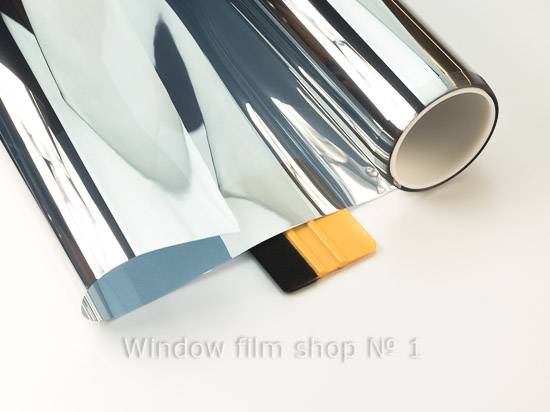
How a self adhesive window film is built
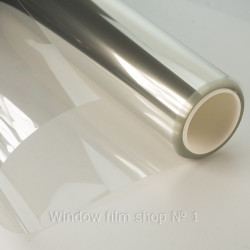
The design is simple and has not changed in decades. Three layers, from the glass outwards:
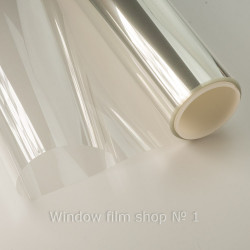
- The film itself - polyester, vinyl or PVC, tinted, frosted or clear.
- A thin transparent layer of glue.
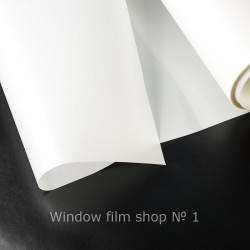
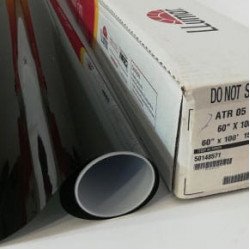
- A removable liner: clear plastic on most films, thick paper on the frosted PVC ones.
The liner is what keeps the window film adhesive alive in the roll - it stops the glue drying out and lets the material be rolled, boxed and shipped. The glue layer is thin and picks up everything: touch it with dry fingers and the print stays visible through the film once it is on the glass.
The liner always comes off before the film goes on
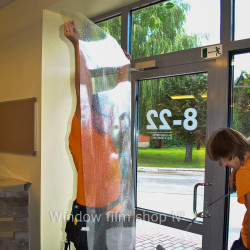
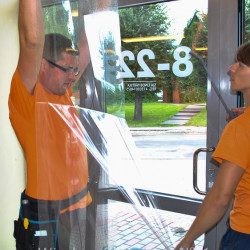
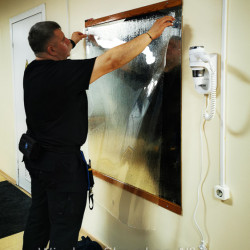
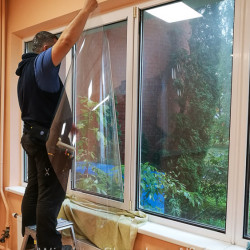
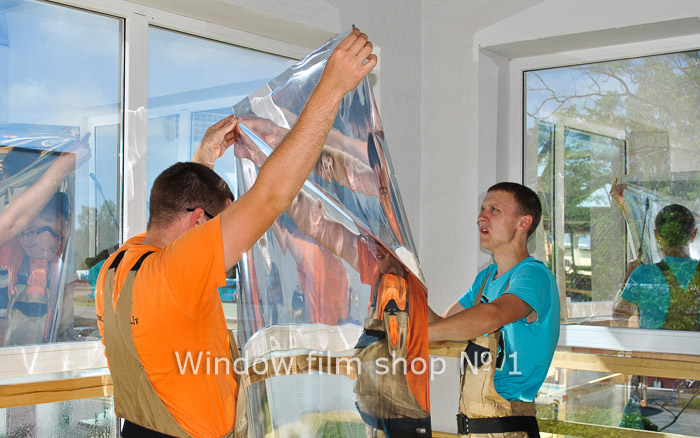
It sounds obvious, and it is still the most common mistake we hear about. On a large pane it is easier with two people: one holds the sheet, the other peels the liner back and sprays the solution as the glue is exposed. Professionals do it alone because they do it every day.
What the installation solution actually does
It is not glue. The solution wets the glass so the adhesive cannot grab instantly - that is the whole point. You get a minute or two to slide the sheet into position, square it against the frame, then squeeze the water out from the centre with the tool. Air and water leave together, and the glue takes hold as the pane dries.
Fit a self adhesive glass film dry and it bonds where it first lands, complete with the air trapped under it. That cannot be corrected afterwards - the sheet is scrap.
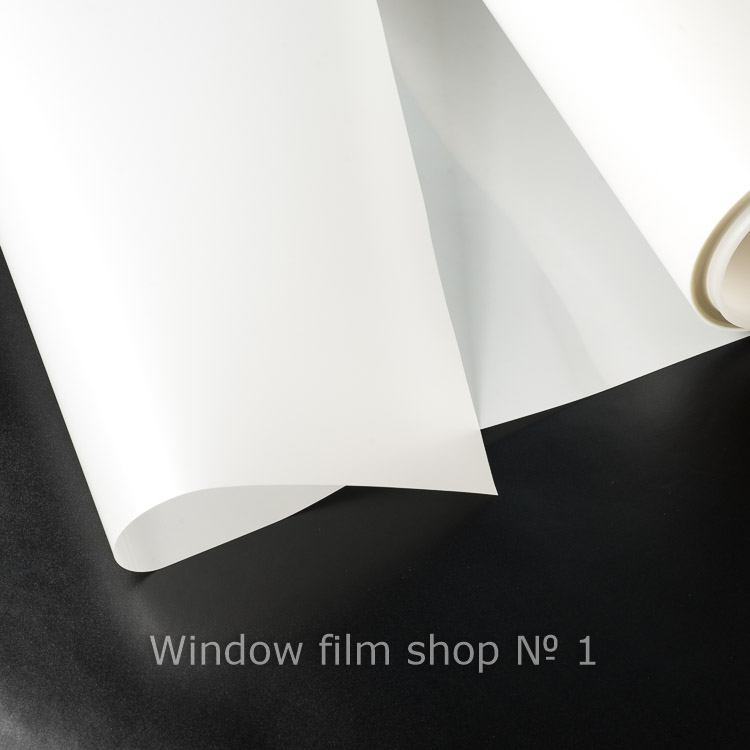
Polyester, vinyl or PVC - what the film is made of
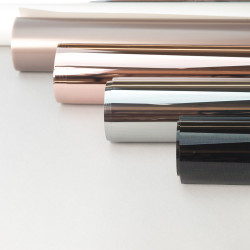
The base material follows the job. Solar, mirror and safety films are polyester (PET): it is optically clear, takes metal coatings and holds its shape for years without yellowing. Frosted and decorative films are vinyl or PVC - softer, slightly thicker, and better at imitating sandblasted or etched glass because the surface can be given a texture.
What all of them share is the coating on the outer face: it rejects 99% of UV, which is what stops furniture, floors and curtains fading near a sunny window, and it resists everyday scratching from cloths and squeegees.
How long it stays on the glass
Fitted on the inside of the pane - the normal case - a film lasts nine years and more. On the outside face, where it takes rain, frost and direct sun all year, the working life is about four years and up. Exterior mounting is the exception, used when there is no access from inside, and it is a conscious trade: better heat rejection, shorter life.
Six categories of self adhesive window tint
Which one you need depends on what the window is doing wrong.
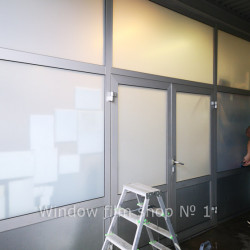
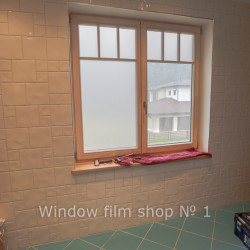
- Frosted film - blocks the view in both directions, day and night, and keeps the daylight. Bathrooms, front door panels, office partitions.
- Privacy film - a range of shades and effects when you want the room screened but not sealed off.
- Obscuring film - the view from outside is gone, the light stays.
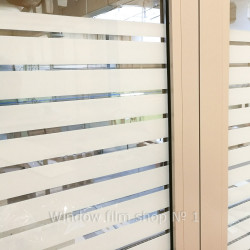
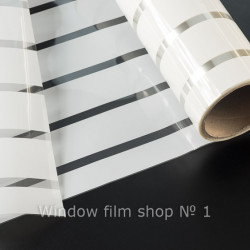
- Decorative film - patterns and textures for plain glass that looks unfinished.
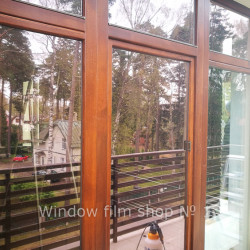
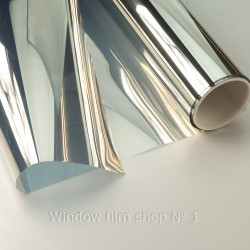
- Reflective film - mirror effect from the street in daylight, several strengths of reflection, and the heat stays outside.
- Blackout film - fully opaque, no light either way. Storage rooms, home cinemas, service areas.
Ordering an adhesive window film cut to size
- Measure the glass - the pane you can see, not the frame.
- Enter the height and width in inches on the product page, fractions included: 20 20/32" x 45 15/32" goes in exactly as written, and there is no need to reduce the fractions.
- Add to cart. The price appears instantly, the piece is cut to 1/32", and every sheet arrives labelled with its size.
Anything in the catalogue can be ordered this way - see the custom size window film section. Ordering a window adhesive film cut to your measurements costs the same as buying it by the roll: you pay for the material, not for the cutting.
Where these films end up
- Bathrooms and shower enclosures - the classic case for frosted material; humidity is not a problem for it.
- Ground-floor rooms facing a sidewalk - curtains stay open all day because there is nothing left to see from outside.
- South and west-facing rooms - reflective and solar films cut the afternoon heat, and the air conditioner runs less.
- Glazed doors and partitions in offices - daylight crosses the floor, meetings stay private.
- Storefronts and display cases - decorative patterns, or a clear safety layer that holds the glass together if it is hit.
Two mistakes that ruin the job
- Fitting the sheet with the liner still on. The solution holds it against the glass for a day or two and everything looks fine - then the water dries, and the film falls off, because the glue never touched the pane.
- Skipping the solution. Covered above: the sheet bonds instantly with air underneath and cannot be repositioned.
Adhesive film or static cling?
These two get mixed up constantly, and they are not the same product. Static cling has no glue at all - it holds by suction against smooth glass, comes off with a fingernail and can be reused. That makes it convenient for a rented apartment or a seasonal decoration, and unreliable for anything permanent: on a warm pane, on a large sheet or on glass that is not perfectly smooth it lets go.
Everything in this section is the glued kind. It goes on once, stays for years, and comes off when you decide it should.
Taking the film off later
Any self adhesive window tint film is designed to come off without damaging the glass. A sheet that has been up for a couple of years peels in one piece; one that has been there over ten years may have gone brittle and comes away in strips, so plan for a scraper, some heat and more time. Glue residue washes off with an ordinary glass cleaner.
That is the practical difference between adhesive window film and replacing the glazing: the film is reversible. If the room changes use, or you sell the house, the pane goes back to what it was.
Where to start
If you already know the effect you want, go straight to the category above. If not, the types of window films section compares them side by side. Window Film Shop #1 ships across the USA, and every order leaves with the tool, the concentrate and the test piece in the box.