House Window Tint & Home Window Film
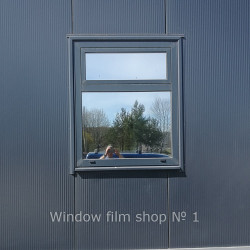
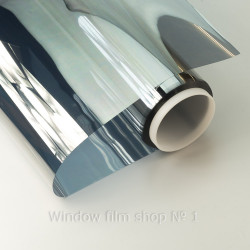
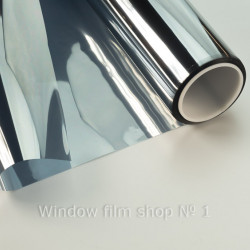
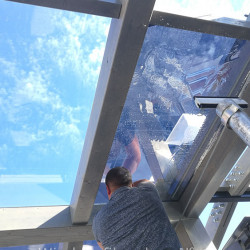
House window tint is a thin polymer film bonded to the room side of the glass. It changes what the window does without changing the window: solar energy is turned back before it warms the room, ultraviolet is filtered out almost completely, the view from the street is cut off either during daylight or around the clock, and a clear safety layer can hold a broken pane together instead of letting it fall. The frame, the glass and the daylight stay exactly as they were, and the whole job costs a fraction of what new glazing costs.
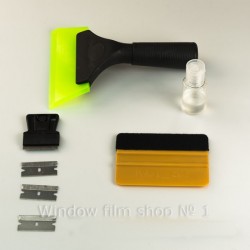
Window Film Shop #1 stocks home window films for every one of those jobs - solar, mirror, privacy, frosted and safety - and all of them are meant to be fitted by the owner, not by a crew. You enter the size of your glass in inches, down to 1/32", and the sheet is cut to those numbers at no extra charge; the largest single piece is 110 inches. Every order leaves with a 3M squeegee, a bottle of mounting concentrate and a free test piece of the same material, so the first attempt happens on a scrap.
What window tint for home windows actually does
- Heat. The reflective films work on the energy, not on the light. Strata 10 turns back 91% of the total solar energy that hits the glass, Strata 20 stops 84% of it. A south-facing living room that used to be unusable from two in the afternoon becomes an ordinary room again.
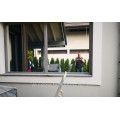
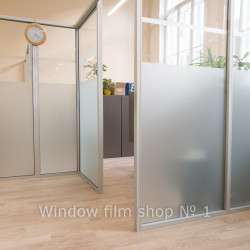
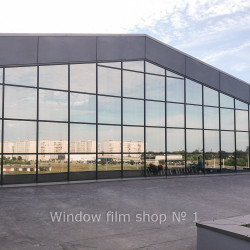
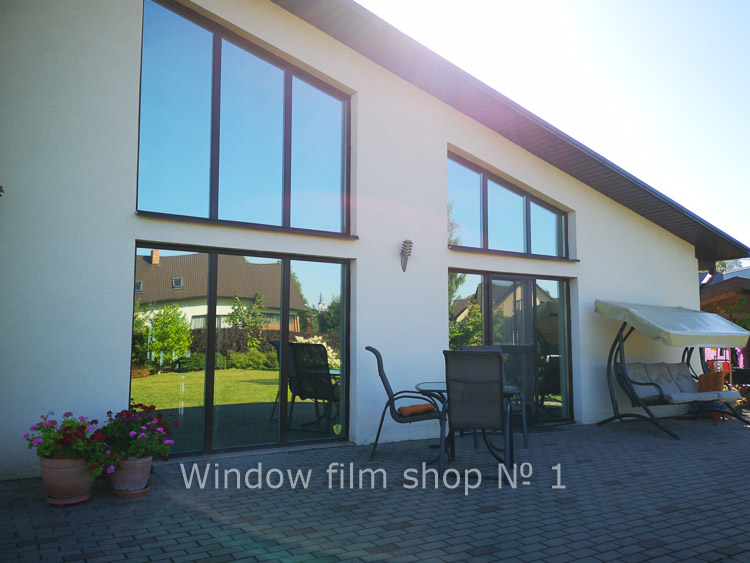
- Privacy on your terms. A mirror film screens the room while it is brighter outside than in - that is daylight hours, and it reverses in the evening once you switch the lights on. A matte or frosted film screens it in both directions at any hour, and keeps most of the daylight while doing so.
- Energy. Solar heat coming through glass is a large part of what the air conditioner has to remove in summer. Less of it entering means less running time, and that shows up on the bill rather than in a brochure.
- 99% of the ultraviolet. UV is the main reason a rug bleaches along one edge and a wooden floor goes two shades lighter near the window. Every film in this section rejects 99% of it - the frosted ones and the clear safety film included, not only the dark ones.
Which film solves your problem? Real models, cut to size
The quickest way to choose is to start from the thing that annoys you, not from the specification sheet. Four situations cover almost every house, and each of them has a model behind it that we actually keep in stock. Every one of them is cut to your dimensions - inches, fractions to 1/32", no charge for the cutting.
| Your problem | The solution | Our model | Cut to size |
|---|---|---|---|
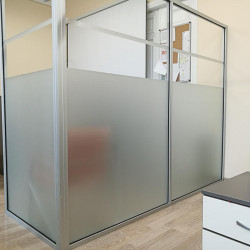
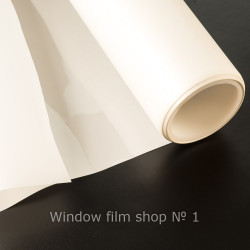
| Neighbors see into the rooms, day and night | Matte or frosted film: the view is gone in both directions at any hour, the daylight stays | Stella White Matt or Solo 002 | Yes, in inches to 1/32" |
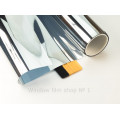
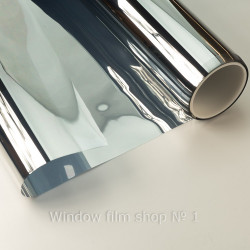
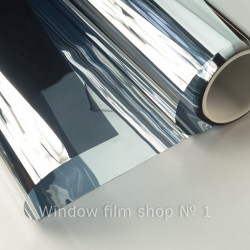
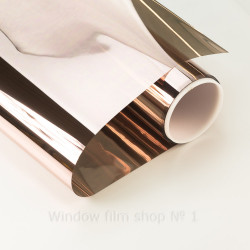
| Privacy in the daytime, but the view outside has to stay | One-way mirror film: mirrored from the street while it is brighter outside, clear from the room | Strata 20 | Yes, in inches to 1/32" |
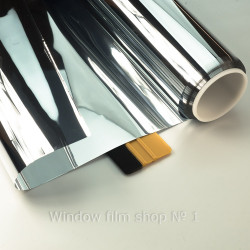
| Rooms overheat, glare on screens, furniture fading | Solar control film: up to 91% of the solar energy turned back, 99% of the UV | Strata 10 inside, Bronze Ex 20 outside | Yes, in inches to 1/32" |
| Children or accidents near glass, worry about shards | Clear safety film: holds a broken pane together instead of releasing it | 4 mil Clear Safety Window Film | Yes, in inches to 1/32" |
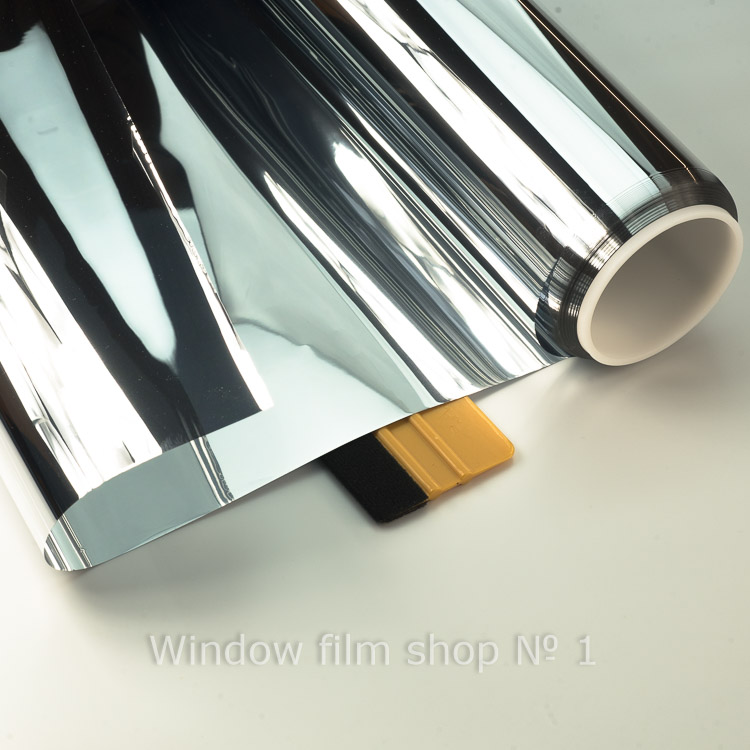
Home window films in this section - the numbers
Two figures decide most of the choice. VLT is how much visible light comes through: 8% is a genuinely dark glass, the low twenties is the normal working level for a large window, and anything from 30% upwards reads as light. TSER is how much of the total solar energy the film turns back - that is the heat figure, and it is the one worth comparing.
| Model | Color and effect | VLT | TSER | Mount | UV |
|---|---|---|---|---|---|
| Strata 10 | Silver mirror, dark | 8% | 91% | Interior | 99% |
| Strata 20 | Silver mirror, standard | 23% | 84% | Interior | 99% |
| Strata 35 | Light silver, semi-reflective | 36% | 67% | Interior | 99% |
| Strata Ex 20 | Silver mirror for the outer face | 22% | 83% | Exterior | 99% |
| Strata Ex 35 | Light silver for the outer face | 32% | 71% | Exterior | 99% |
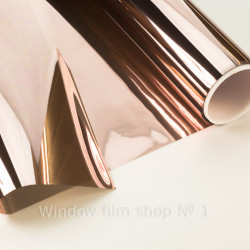
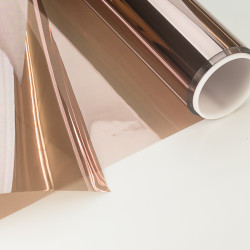
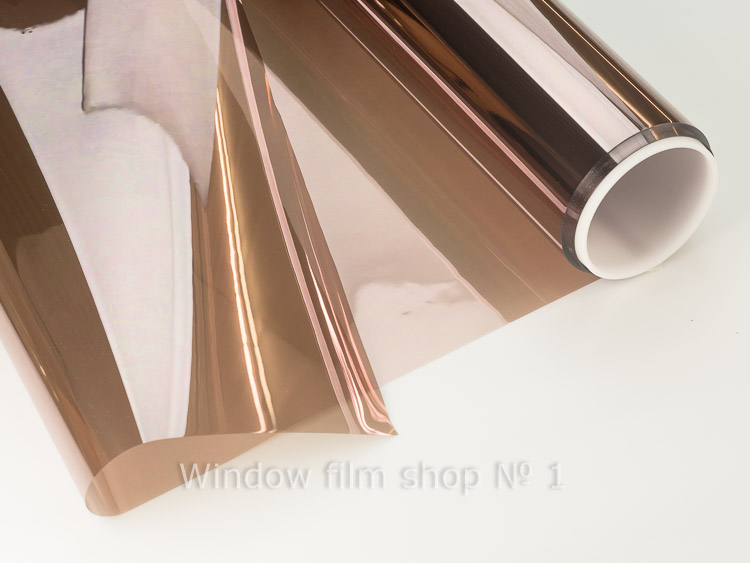
| Bronze Ex 20 | Warm bronze, sputtered | 21% | 83% | Exterior | 99% |
| Bronze Ex 35 | Light bronze, sputtered | 36% | 75% | Exterior | 99% |
| Stella White Matt | White matte, opaque | 71% | 35% | Interior | 99% |
| Stella Milk-matte | Milk white matte, opaque | 67% | 35% | Interior | 99% |
| Solo 002 | Light gray frost, etched look | 75% | 18% | Interior | 99% |
| 4 mil Clear Safety | Clear, holds broken glass | 86% | 16% | Interior | 99% |
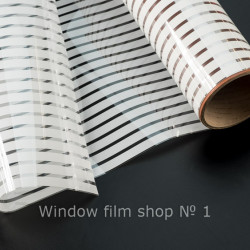
Alongside them the section carries a decorative option: striped film with narrow 3/8 inch stripes, for a pane that should look designed rather than covered.
Everything on that list is stocked as window film for homes rather than for vehicles. The widths, the adhesives and the hard coats are chosen for flat architectural glass, and the cutting works from the measurements of a window - none of it is meant for the curve of a windshield.
Inside the glass or outside it
Almost every job belongs on the inner face. That is where the film is protected from rain, frost, hail and whoever cleans the windows, and that is why an interior sheet lasts nine years and more while the same material on the outer face lasts four years and up. The trade-off runs the other way on performance: stopping the sun before it reaches the pane is 15% to 20% more effective than stopping it afterwards.
So the outer face is a deliberate choice, not a default. It makes sense in two cases: when there is no way to reach the inside of the glass at all, and when a room has to be brought under control and an interior film alone has not managed it. There is a third case worth knowing about - sealed double-pane units with a low-emissivity coating, where a dark, heat-absorbing film on the inside can build up thermal stress in the sandwich. Reflective films are the safe answer there; if you are unsure what your glazing is, ask us before ordering rather than after.
One more limit that catches people out in older houses: patterned, ribbed or hammered glass will not take film. The adhesive needs a smooth surface, and on textured glass it grips only the high points and lets go within weeks.
Browse house window tint by section
If you already know the effect you want, go straight to the relevant section - each one holds the models suited to that job:
- Privacy tint for home - full or partial screening, from a daytime mirror to a fully opaque pane.
- Mirror tint for home - the reflective effect in silver and bronze, several strengths.
- Solar control film - everything aimed at heat and glare, interior and exterior.
- Frosted window film - the etched-glass look for bathrooms, door panels and partitions.
- Safety and security film - clear layers that keep a broken pane in its frame.
- Exterior window film - the outer-face range, for glass you cannot reach from inside.
The sections overlap on purpose: the same model can be the right answer to two different problems, which is why the table above starts from the problem rather than from the shelf.
Advantages of house tint
- It goes on with water, not with skill. The adhesive is already on the film; the mounting concentrate keeps it from grabbing until you have the sheet square against the frame.
- It lasts. Nine years and more inside, four years and up outside.
- Humidity is not its enemy. The material is polymer and is applied wet in the first place - bathrooms and kitchens are ordinary working conditions for it.
- Nothing to maintain. Once it is on and dry, it needs the same care as the glass: a soft cloth and an ordinary cleaner.
- It is reversible. The sheet comes off without damaging the pane, which is what makes a rented apartment or a house you plan to sell a non-issue.
What a house window tint film will not survive
A home window tint film is tough, but it is not armor, and the hard coat protects it from cloths and squeegees rather than from everything. These are not drawbacks so much as things worth knowing before the sheet goes on the glass:
- Metal against the surface. Blades, scrapers, buckles, zips on a bag swung past a glazed door.
- A large dog greeting you at the patio door. Claws mark the film long before they mark the glass.
- A steam jet aimed at the pane. Ordinary bathroom steam is fine; a garment steamer held against the film is not.
- Pressure washers - the kind used on cars and walls. On an exterior sheet they lift the edges.
In our experience the sheets that take the most abuse are on entrance doors and glass partitions, and the damage is almost always mechanical rather than weather. The good news is that a single pane can be redone on its own: order one more piece to that size and the replacement arrives ready to fit.
How to order window tint film for home cut to size
- Measure the glass, not the frame - the visible pane is what the film has to cover.
- Enter the height and width in inches on the product page, fractions included: 20 20/32" x 45 15/32" goes in exactly as written, and there is no need to reduce the fractions. The largest single piece is 110 inches.
- Add to cart. The price appears at once, the sheet is cut to 1/32" and arrives labeled with its size, with the squeegee, the concentrate and the test piece in the box.
Odd-shaped and small panes are exactly where this pays off: a 24 x 16 inch window costs what that window costs, instead of a roll with most of it going in the trash. Ordering a window film for home glass cut to your measurements costs the same as buying it by the roll - you pay for the material, not for the cutting. Before you commit a whole house to one shade, order one pane and live with it for a week; that is what the free test piece and the single-sheet pricing are for.
Window tint for the home - questions before ordering
Is it hard to tint home windows yourself?
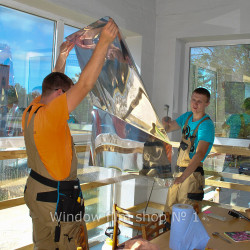
No, and the main reason is that there is nothing to trim. The sheet arrives cut to your glass, so the job is clean the pane, wet it, lay the film on, squeeze the water out. With the 3M squeegee, the mounting concentrate and the practice piece that come with the order, a normal window takes twenty to thirty minutes. The two mistakes that ruin it are leaving the liner on and skipping the solution - both are avoidable on the test piece first.
How do I choose the right window tint for house windows?
Start from the problem, not from the catalog. Privacy day and night - Stella White Matt or Solo 002. Daytime privacy with the view kept - the one-way mirror Strata 20. Heat and glare - Strata 10 inside or Bronze Ex 20 on the outer face. Broken glass held together - the 4 mil clear safety film. After that, the only remaining question is how dark you want the room, and that is the VLT column in the table above.
Will home window film damage double-pane windows?
Reflective films are the safe choice on modern sealed units - from our range Strata 20 has caused no problems in over 15 years of practice. What can create thermal stress on complex glazing is a dark, heat-absorbing film on the inner face of a low-e unit, because the heat it absorbs stays inside the sandwich. If you know your glazing is low-e or gas-filled, check the product description or ask us about that specific window before ordering.
Does a mirror film give privacy at night as well?
No - and anyone who tells you otherwise is selling something. A one-way mirror works on the difference in brightness between the two sides: while it is lighter outside than in, the street sees a mirror. Switch the lights on after dark and the effect reverses. If the window has to be screened around the clock, the answer is a matte or frosted film, not a mirror.
How long does house window film last, and can it be taken off?
Nine years and more on the inner face, four years and up on the outer one, where it takes the weather. It comes off without damaging the glass whenever you decide: a sheet that has been up a couple of years peels in one piece, one that has been there over ten years may come away in strips and need a scraper and some heat. Residue washes off with ordinary glass cleaner. The film itself is single-use - once removed it cannot be put back.
Where to go next
- All window films - the full catalog, compared side by side.
- Custom cut window film - how the cutting to size in inches works, and what arrives in the box.
- Free piece of film - the practice sample that comes with every order.
A window tint for homes is the cheapest change you can make to a room and one of the few you can undo. Enter your sizes in inches, and Window Film Shop #1 ships the cut sheet anywhere in the USA.