Tint Percent
Tint percent, window tint grades, VLT percentage, tint levels — four names for the same number, and it is the number that decides how a film will look on your glass. This page explains what the percentage means, what the levels are called, and which tint percentages we cut to size.
What Tint Percent Means
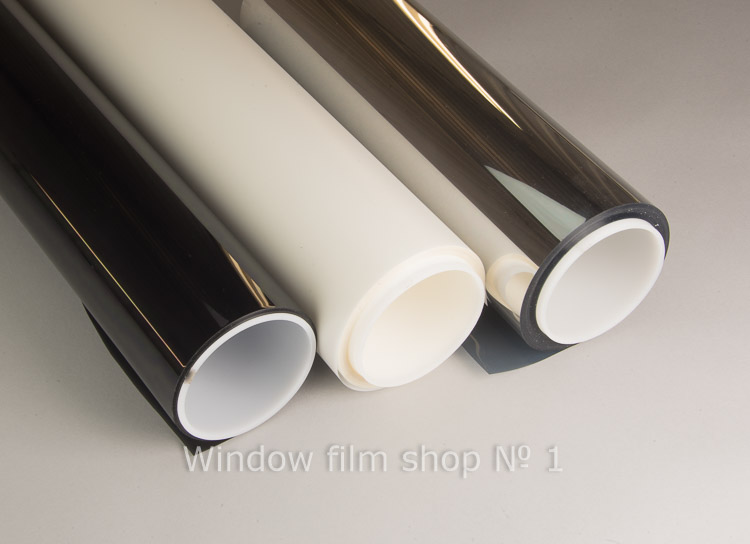
VLT — Visible Light Transmission — is the share of visible light the film lets through, and tint percent is that same figure. A 20% film passes a fifth of the light; an 8% film passes less than a tenth. So the lower the number, the darker the film, the more it cuts glare and the more privacy it gives in daylight.
The VLT of the Film and the VLT of Your Glass
These are two different numbers, and people mix them up. The percentage on a film is the film's own figure; what you actually get is the film on your glass. Even clear high-quality glass passes only about 90% of the light, and some glass is already tinted to 18–20% by the manufacturer — put a 20% film on that and the result is far darker than 20%.
The Darkest and the Lightest Tint Percent We Sell
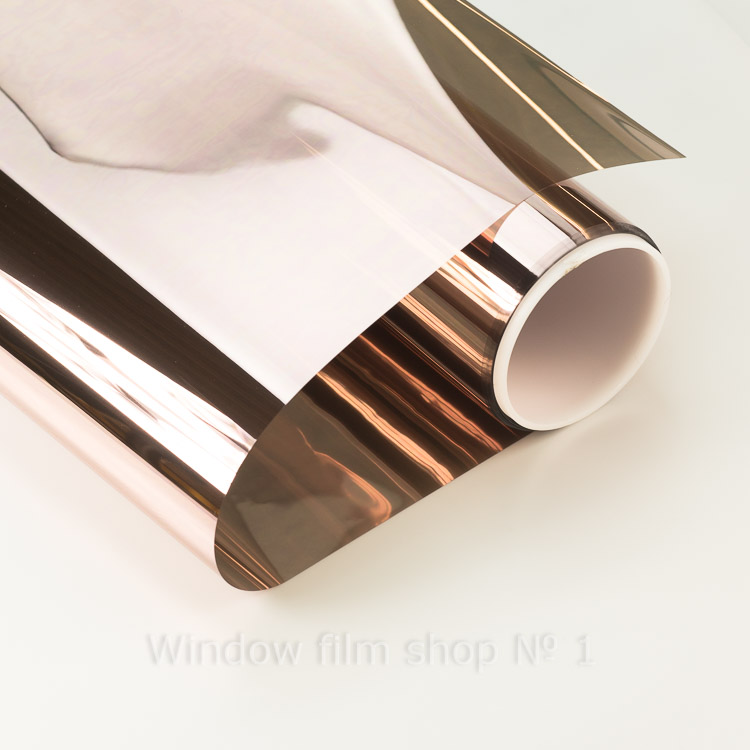
In our own range the darkest film is Strata 10 at VLT 8%, and the lightest are the clear protective films at VLT 82 to 86%, which on the glass are barely visible at all. Everything else sits between the two. A film with VLT 100% does not exist — that is a window with no film on it, and as the paragraph above says, even bare glass is not 100%.
Tint Levels — A Guided Classification
The names below are a working classification, not a standard. Tint preference is individual, and window size matters as much as taste — the same film reads differently on a small kitchen window and on a glass wall.
- Transparent: 80–90% light transmission. Nearly invisible on the glass — this is where the clear protective films sit.
- Very light: 50–70%. Noticeable up close, hardly noticeable from the street.
- Light: 30–45%. Takes the edge off the sun and the glare without darkening the room.
- Medium, or standard: 15–25%. The most ordered level, and the working standard for large windows.
- Dark: 5–10%. Genuinely dark — the strongest sun protection we have, and the level to pick only for a server room, a shopfront or a very large south-facing window.
Note what the classification does not say: 20% is not a dark film. It is called dark all over the internet because most sellers stock two or three options and 20% is the darkest they have. Our range goes down to 8%, so on this site 20% is the standard and dark starts at 10%.
More on the possibilities of glass tint and the characteristics of different types of tint is in the relevant sections of the site.
Choosing a Tint Level for Building Windows
- Go by window size: VLT 30–40% for medium and small windows, 20–25% for large ones. A dark film on a small window makes a cave of the room.
- Look for the compromise. The darkest film gives the most protection from sun and heat, and the same film makes the room gloomy on a winter evening — you live with it all year, not only in July.
Choosing a Tint Level for Vehicle Windows
- Local law comes first: the maximum permitted VLT differs by state and by country, and differs between the windscreen, the front side windows and the rear.
- After that it is preference — how dark you want the car to look and how much you want to see out of it at night.
The Tint Percentages We Cut to Size
- 20 percent window tint — the standard level. In this group: Strata 20 at VLT 23%, Strata EX20 at 22% and Bronze EX 20 at 21%, all rejecting 83–84% of the solar energy.
- 30 window tint — the light group, real VLT 32 to 36%.
- 35 window tint — VLT 36%, the lightest of the sun-control films.
- 40 percent tint — around 40% light transmission. This level is coming to the site as its own section.
Every one of these is cut to your own measurements in inches, in steps of 1/32", with one piece up to 110" on the long side. The tools and the mounting concentrate go into the order, and so does a free piece of film to practise the technique on before you touch the window.
Precut Tint and the Tools
We cut both from the roll and to a finished shape: precut tint options come sized to a specific window, which takes the measuring and the trimming out of the job. The film adhesive, the squeegee and the rest of the tools come with the order, so nothing else has to be bought before the install. Our tint places selection covers the rest of the range.